- All training falls under one of two sets of FAA rules: Part 61 (flexible) or Part 141 (structured).
- Part 141 (universities and fast-track academies) costs the most, but can lower the hours you need for an airline job.
- Part 61 (local schools and independent instructors) is usually cheaper and more flexible. Your instructor matters most.
- For a private pilot license, Part 61 is the recommended route.
What do Part 61 and Part 141 mean?
All flight training is regulated by the FAA, and it falls into two categories:
- Part 61 is the basic set of rules for certification and eligibility for every pilot license and rating. It applies to all pilots.
- Part 141 adds rules on top of Part 61. It demands more structure, testing, and proficiency checks. To be Part 141, a school needs a rigorous, FAA-approved curriculum and management system. These are usually universities or large academies.
The biggest upside of Part 141 is that it qualifies you for a restricted ATP (R-ATP). If flying for the airlines is your goal, the ATP is the final license you'll get. Pilots trained under Part 61 need 1,500 flight hours to qualify for their ATP. Graduates of a 141 program only need 1,000 or 1,250, depending on the school. That can save a lot of time when you're building hours toward an airline job.
The biggest downside of Part 141 is typically the cost.
Part 141: fast tracks and universities
Fast-track academies
Programs like ATP Flight School promise to get you through all your ratings and to an airline as fast as possible. It does work for some people, and if everything goes right you could be at an airline in less than a few years.
But they are usually a huge financial burden. Some require $100,000+ up front, or they have you finance it, which leaves a big debt over you through training and your early career. If life plans change, or you find out you can't continue (medically or otherwise), it can be very hard to recover from. These programs are also built for speed through the pipeline, not the highest quality of education.
Universities
A university generally gives you the best quality of flight training, but still at a very high cost. As one real example, training at Utah Valley University's flight program cost nearly $300 per flight hour with instruction. Most universities charge a semester's tuition and flight training costs on top, which can add up to $16,000 to $18,000 per semester.
This can be a great option if you also want a bachelor's degree and other classes, and especially if you have scholarships. Scholarships are the biggest factor here. If they cover some or all of the cost, this path makes a lot more sense. Universities also give you clubs, events, cadet programs, mentors, and lots of other students, which grows your knowledge immensely.
Part 61: flight schools and independent instructors
Independent flight schools
These are very common and found at most airports. They're the middle ground between universities and fully independent instruction: privately owned, with a handful of airplanes and instructors on staff. They differ a lot. Some act like a 141 program with lots of structure, others are laid back and let you schedule yourself.
Tip: Look at a school's rental rates, not its advertised course price. A school advertising "Private pilot license only $8,000!" often has high rental rates and leaves a lot of costs out of that number to get you hooked.
Independent instructors
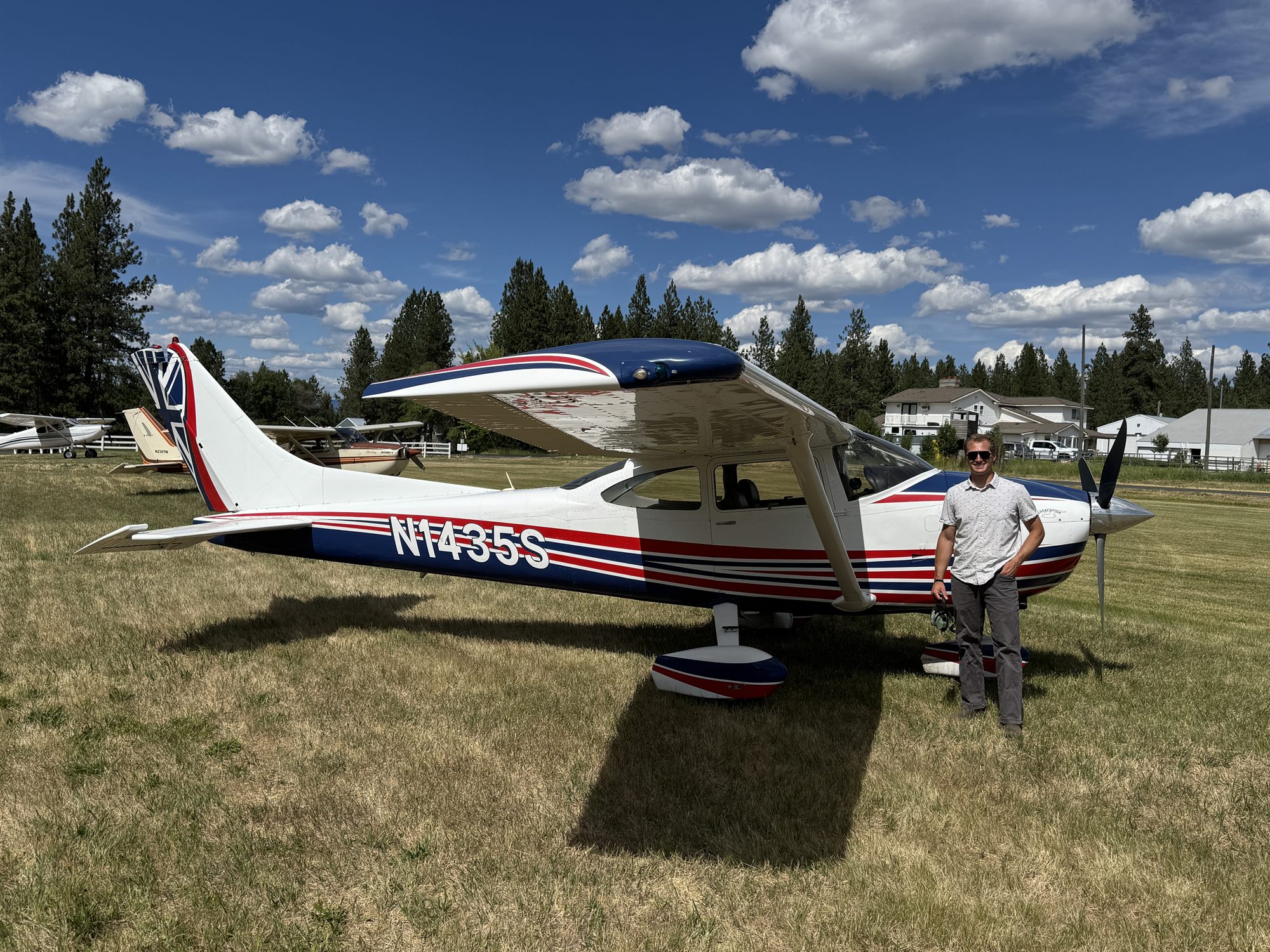
This is when a CFI teaches in a privately owned airplane without being part of a school. It's almost always the cheapest route, because you cut out the middle man. For example, a typical Part 61 school might charge $180/hour to rent a Cessna 172 plus $70/hour for instruction. An independent CFI can usually cut the rental cost a little and the instruction cost a lot. At Altitude Adjustment, a 172 is $170/hour plus $45/hour for instruction.
The tradeoff: it's the hardest route to self-manage, and it can be the most isolated. You aren't around other students at a school, and you don't fly with many different instructors. To make up for that:
- Ask your CFI to connect you with other students working on the same thing. Fly in the backseat, do group ground sessions, study together, and quiz each other.
- Fly with another instructor before your checkride, or whenever a concept isn't clicking. Sometimes a different explanation makes all the difference.
How to pick an instructor
Whichever route you choose, your experience depends a lot on your CFI. There are amazing, inspiring instructors out there, and also some who don't deserve their licenses. Ask yourself:
- Do they reach out to you?
- Are they invested in your training, or just there to build their own hours?
- Do they have their own teaching resources and curriculum?
- How long have they been teaching, and what is their track record?
- What is their attitude about safety? Do they show off or put themselves on a pedestal?
- Do they hold you to a high standard, or are they too lax?
- What airplanes do they have access to?
- Does their rate match the effort, resources, and energy they provide?
- Does their teaching and communication style work for you?
You can always switch instructors if it isn't working out, even at a flight school. And independent instructors aren't hard to find: one Facebook post and you'll have 20 instructors messaging you.
Comparison chart
| 61 Independent | 61 School | 141 University | 141 Fast Track | |
|---|---|---|---|---|
| Cost | Lowest | Lower | Highest | High |
| Pace | Self-paced | Usually self-paced | Slowest | Fastest |
| Aircraft quality | Depends | Depends | Best | Better |
| Education quality | Depends | OK | Best | OK |
| Flexibility | Best | Better | Little | Little |
| Connections & community | Few | Few | Best | OK |
| Safety | Depends | Good | Best | Good |
| Instructor availability | Depends | Better | OK | OK |
| Student pass rate | Depends | Good | Best | Better |
| Stage checks | None | None | Yes | Yes |
The bottom line
There are so many things to consider, and these are just the biggest ones. Everyone goes through this decision, and you will get where you want to be. Just like college, you can transfer partway through if it isn't working out. Your flight time always counts toward your totals, no matter where you train.